
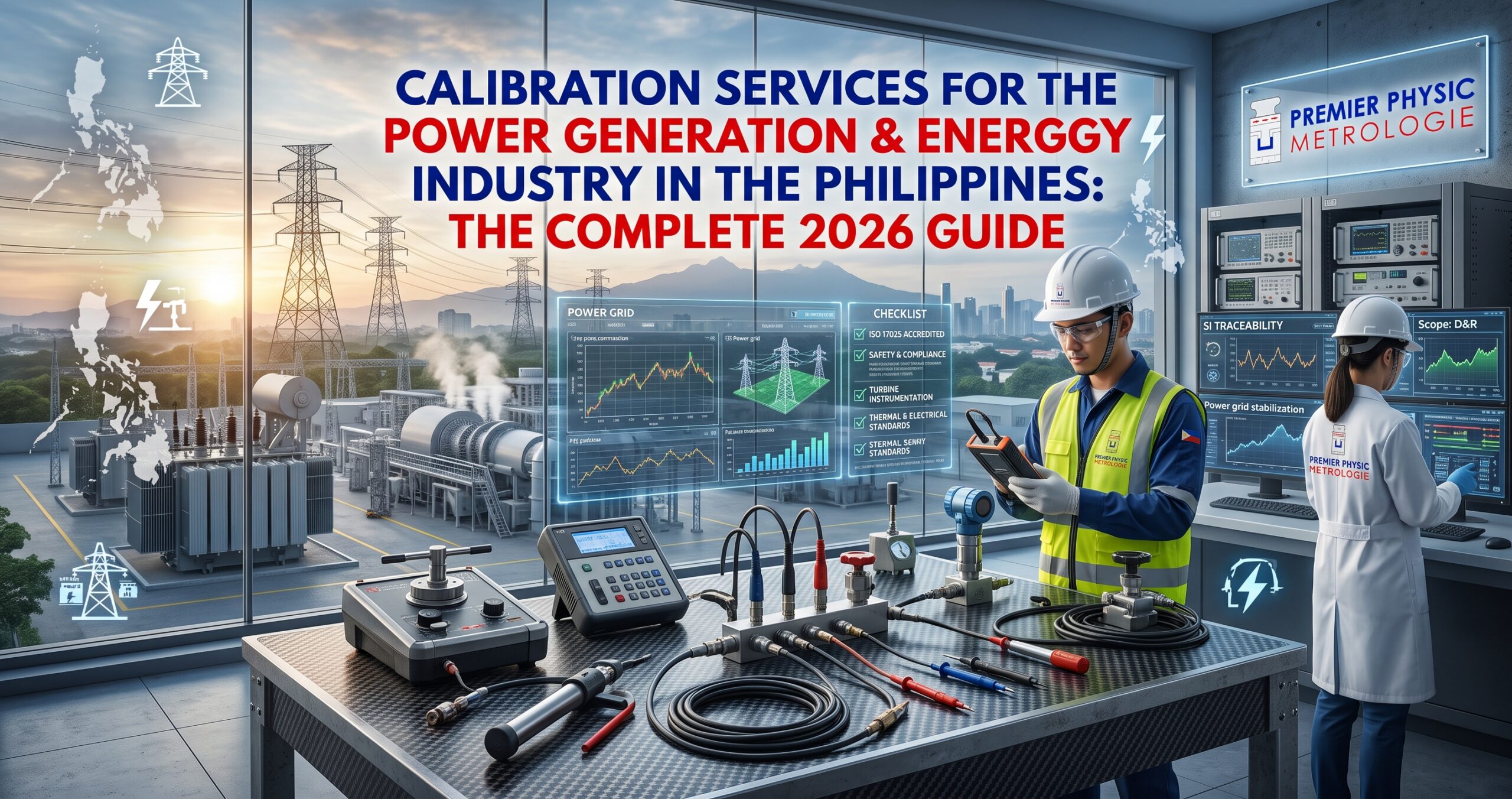
The Philippine power generation sector is the backbone of the country’s economic development — supplying the electricity that powers the factories, hospitals, schools, offices, and homes of 110 million Filipinos. From the coal-fired power plants in Batangas and Pagbilao that provide baseload generation, to the geothermal stations in Leyte and Sorsogon that tap the Philippines’ extraordinary volcanic energy resources, to the growing fleet of solar farms and wind energy installations that are transforming the country’s energy mix — Philippine power generation represents some of the most capital-intensive, operationally complex, and regulatory-intensive industrial operations in the country.
In every power generation facility, measurement instruments are the nervous system of operations — monitoring steam temperatures and pressures in boiler systems, measuring fuel flow for energy accounting and emission calculations, tracking electrical output for grid dispatch and settlement, monitoring turbine bearing temperatures for predictive maintenance, verifying protection relay settings that prevent equipment damage and grid disturbances. The accuracy of these measurements determines plant efficiency, commercial revenue, regulatory compliance, and equipment safety.
Yet power generation calibration remains one of the less systematically managed calibration disciplines in Philippine industry. Many power plants have comprehensive maintenance programs for mechanical equipment — but instrument calibration programs that are reactive, incomplete, or managed to a lower standard than the plant’s operational significance warrants. This guide addresses that gap — providing the most comprehensive resource on calibration services for the Philippine power generation and energy sector available in 2026.
Section 1: Why Calibration Is Critical in Philippine Power Generation
Operational Efficiency — The Commercial Case
In power generation, measurement accuracy has a direct commercial value that few other industries can match. The efficiency of a thermal power plant — the ratio of fuel energy consumed to electrical energy produced — is calculated from measurements of fuel consumption and electrical output. A fuel flow meter that reads 1% high systematically overestimates fuel consumption, causing the plant’s calculated heat rate to appear worse than actual — leading to incorrect fuel cost accounting, distorted efficiency benchmarking, and potentially incorrect maintenance investment decisions.
The commercial impact of meter inaccuracy at scale is significant. A 100 MW coal-fired power plant in the Philippines consuming coal at a heat rate of 10 GJ/MWh burns approximately 33 tonnes of coal per hour. A fuel weighing system with 1% systematic error generates coal consumption records 33 tonnes per day higher than actual — over a year, an error of approximately 12,000 tonnes. At Philippine coal import prices, this represents millions of pesos in fuel accounting error annually.
Similarly, electrical energy metering accuracy directly determines the revenue received by generation companies under the Philippine Wholesale Electricity Spot Market (WESM) and bilateral power purchase agreements. The energy meters used for WESM settlement must meet ERC accuracy requirements — meters that under-read output reduce generation company revenue; meters that over-read increase it at the expense of distribution utilities and consumers.
Grid Reliability and Protection — The Safety Dimension
Power generation equipment — steam turbines, generators, transformers, and the protection systems that guard them — depends on accurate measurement for both normal operation and emergency response. Protection relay systems that detect fault conditions (overcurrent, overvoltage, differential current, reverse power) and initiate protective tripping of generators, transformers, and transmission equipment must be correctly set and regularly tested using calibrated test equipment.
Incorrect protection relay settings — resulting from test equipment that is out of calibration or from relay parameters that have drifted — can cause:
- Failure to trip on genuine faults: allowing equipment damage to develop when protection should have intervened — the worst-case scenario in power system protection
- Spurious tripping: unnecessary generator or transformer tripping that causes generation loss, grid instability, and in severe cases, cascading power outages
- Incorrect coordination: miscoordinated protection systems that fail to isolate faults correctly, allowing faults to propagate through the grid rather than being contained
The consequences of protection system failures in the Philippine power grid — which has historically experienced significant reliability challenges — extend beyond individual plant equipment to grid stability and consumer supply reliability. Calibrated relay test equipment is not merely a quality management requirement — it is a grid safety requirement.
Environmental and Regulatory Compliance
Philippine thermal power plants are major point sources of air pollutants — sulfur dioxide (SO2), nitrogen oxides (NOx), particulate matter (PM), and carbon dioxide (CO2). DENR environmental compliance certificates for Philippine power plants specify emission limits and monitoring requirements. The instruments used to measure and report stack emissions — continuous emission monitoring systems (CEMS), fuel composition analyzers, and stack sampling equipment — must be calibrated to produce valid compliance data.
Energy Regulatory Commission (ERC) oversight of power generation in the Philippines includes requirements for accurate metering of electricity generation output, fuel consumption measurement, and auxiliary energy consumption. ERC-regulated meters and measurement systems require calibration documentation that satisfies ERC inspection requirements.
Section 2: Power Generation Instrument Categories Requiring Calibration
Philippine power generation facilities — regardless of technology type — share a common set of calibration-critical instrument categories. Here is a comprehensive guide to the instruments requiring calibration across the Philippine power sector.
Temperature Instruments — Steam Cycle and Process Monitoring
Temperature measurement in thermal power plants encompasses some of the widest temperature ranges of any Philippine industrial application — from cooling water at 20 to 35 degrees C through steam temperatures at 500 to 600 degrees C in supercritical steam turbines. Key temperature calibration requirements:
- Boiler steam temperature sensors: Superheater outlet temperature is a critical operating parameter in coal-fired and oil-fired power plants — determining steam turbine blade metal temperatures and plant thermal efficiency. Thermocouples at superheater outlets require annual calibration at temperatures up to 600 degrees C or above, using calibrated reference thermocouples traceable to ITS-90 (International Temperature Scale of 1990).
- Turbine bearing temperature sensors: Journal bearing temperatures are continuously monitored for predictive maintenance and protection — high-high bearing temperature trips the turbine to prevent bearing seizure and shaft damage. RTDs at turbine bearings require annual calibration with particular attention to accuracy near the alarm and trip setpoints.
- Generator stator winding temperature sensors: Embedded resistance temperature detectors (RTDs) in generator stator windings monitor insulation temperature — a key indicator of generator loading and insulation condition. Stator RTD calibration verifies accuracy at operating temperatures (typically 80 to 130 degrees C).
- Cooling water temperature sensors: Condenser inlet and outlet temperatures in thermal power plants are used to calculate condenser performance — a key efficiency parameter. Annual calibration of cooling water temperature sensors.
- Geothermal wellhead and separator temperature sensors: Geothermal power plants use temperature measurement extensively in wellhead monitoring, steam-water separator control, and turbine inlet monitoring. Geothermal steam contains non-condensable gases and scale-forming minerals that accelerate sensor degradation — requiring more frequent calibration than clean steam applications.
- Transformer oil temperature indicators: Power transformer oil temperature gauges and RTDs monitor transformer loading and cooling system performance. Transformer temperature measurement calibration protects against overloading that degrades insulation and shortens transformer life.
Pressure Instruments — Steam System and Process Safety
Pressure measurement in Philippine thermal power plants spans from low-pressure condenser vacuum measurement (negative gauge pressure, approximately minus 0.085 MPa) through high-pressure steam measurements in supercritical plants (above 22 MPa). The calibration range requirements are broad and the accuracy requirements are high:
- Steam drum pressure transmitters: Steam drum pressure is the primary controlled variable in drum boiler units — directly determining steam saturation temperature and boiler water inventory. Drum pressure transmitters require annual calibration with particular accuracy at operating pressure.
- Main steam pressure transmitters: High-pressure steam supply to the turbine stop valves is measured for turbine control and protection. Main steam pressure calibration must cover the full operating range from cold-start conditions to full-load operating pressure.
- Condenser vacuum transmitters: Condenser vacuum (sub-atmospheric pressure) directly affects turbine exhaust conditions and thermal efficiency — lower vacuum (higher absolute pressure) reduces turbine output and efficiency. Vacuum transmitter calibration at sub-atmospheric pressures requires appropriate low-pressure reference standards.
- Feedwater pump discharge pressure: High-pressure feedwater pump discharge measurement in boiler feed systems — pressures up to 25 MPa in supercritical plants — requires high-pressure calibration capability.
- Pressure safety valves on boilers and vessels: Boiler drum safety valves, superheater outlet safety valves, and reheater safety valves must be set and tested to ASME Boiler and Pressure Vessel Code requirements. PSV bench testing equipment requires calibrated pressure measurement covering the valve set pressure ranges.
Electrical Power Meters and Transducers — Revenue and Grid Compliance
Electrical measurement in Philippine power generation is regulated by ERC and forms the basis for power purchase agreement revenue and WESM settlement. Electrical instrument calibration is therefore both a commercial and a regulatory requirement:
- Revenue energy meters (kWh meters): The primary revenue meters measuring generation output for WESM settlement and power purchase agreement billing must meet ERC accuracy Class 0.2S or better. Revenue meter calibration verifies accuracy across the relevant power factor and current range using calibrated power measurement reference equipment. ERC specifies calibration intervals and accreditation requirements for revenue meter test laboratories.
- Current transformers (CTs) and voltage transformers (VTs): Instrument transformers that scale down high-voltage and high-current power system signals to the measurement range of revenue meters must be calibrated for ratio accuracy and phase angle error — parameters that directly affect energy meter accuracy.
- Power transducers: Electronic power transducers converting AC power measurements to 4-20 mA or digital signals for SCADA systems require calibration of the power measurement accuracy including active power (kW), reactive power (kVAr), and apparent power (kVA).
- Power quality analyzers: Power quality measurement instruments used for grid compliance monitoring — measuring harmonic distortion, voltage unbalance, frequency, and power factor — require periodic calibration.
- High-voltage test equipment: High-voltage test sets used for insulation testing of generators, transformers, and cables require calibration of their voltage and current output measurement accuracy.
Fuel Measurement — Coal, Oil, and Gas
Fuel consumption measurement in Philippine thermal power plants serves both energy accounting (efficiency calculation) and environmental compliance (emission calculations based on fuel consumption and emission factors):
- Coal weighing systems: Conveyor belt scales (weightometers) at coal-fired power plants measure coal delivery rates to fuel the boilers. Weightometer calibration verifies the mass-per-unit-length and belt speed measurement accuracy — typically using calibrated reference weights applied to the belt scale and comparison against a calibrated reference weigh system. Annual calibration is standard for belt scales at Philippine coal power plants.
- Fuel oil flow meters: Oil-fired power plants and coal plants using fuel oil for startup and support burning measure fuel oil consumption through flow meters — mass or volumetric. Fuel oil meter calibration verifies accuracy at the flow rates used in plant operations.
- Natural gas flow meters: Gas-fired combined cycle and gas turbine power plants in the Philippines measure natural gas consumption through fiscal metering systems — typically using ultrasonic or turbine meters with temperature and pressure compensation for volume-to-mass conversion at standard conditions.
- Diesel generators — fuel consumption meters: Emergency diesel generators at power facilities and industrial installations use fuel flow meters for consumption tracking. Annual calibration of diesel generator fuel meters.
Protection Relay Test Equipment
Protection relays — the devices that detect abnormal electrical conditions and initiate automatic protective actions — are among the most safety-critical devices in the Philippine power system. They are also among the most complex to test, requiring specialized test equipment whose calibration directly affects the validity of protection relay settings and test results:
- Microprocessor relay test sets: Modern multi-function test sets that can inject current and voltage signals into protection relays to simulate fault conditions and verify relay pickup, operate time, and reset characteristics. The current injection, voltage injection, and timing measurement accuracy of these test sets require periodic calibration.
- Secondary injection test sets: Simpler AC current and voltage injection equipment for testing older electromechanical and solid-state protection relays. Calibration verifies the accuracy of the injected current, voltage, and the timing measurement used to verify relay operating time.
- Primary injection test equipment: High-current test sets used for primary injection testing of current transformers, busbar protection systems, and circuit breaker mechanisms. Calibration of primary injection test equipment covers the injected current measurement accuracy.
Vibration Monitoring — Turbine and Generator Condition
Vibration monitoring in Philippine power plants provides the primary early warning of developing mechanical problems in rotating machinery — steam turbines, gas turbines, and generators whose undetected vibration problems can progress to catastrophic mechanical failure:
- Online vibration monitoring systems: Permanently installed vibration sensors (proximity probes, accelerometers, velocity transducers) continuously monitoring shaft vibration and casing vibration at steam turbines and generators. The vibration measurement accuracy of online systems affects both alarm and trip setpoint integrity and predictive maintenance diagnosis accuracy.
- Portable vibration analyzers: Handheld vibration measurement instruments used by maintenance engineers for periodic vibration surveys and transient measurements during plant startup and load changes. Portable vibration analyzer calibration verifies the amplitude and frequency measurement accuracy.
Environmental Monitoring — DENR Compliance
Philippine thermal power plants require extensive environmental monitoring under their DENR Environmental Compliance Certificates:
- Continuous Emission Monitoring Systems (CEMS): CEMS installed at stack outlets of coal and oil-fired power plants continuously monitor SO2, NOx, CO, CO2, and particulate concentrations. CEMS require periodic calibration using certified reference gas mixtures and regular performance auditing — typically semi-annual span calibration and annual relative accuracy test audits (RATA) per DENR requirements.
- Opacity meters (transmissometers): Stack opacity measurement at coal-fired plants monitors particulate emission compliance. Opacity meter calibration uses calibrated neutral density filters.
- Ambient air quality monitoring stations: Some large Philippine power plants maintain ambient air quality monitoring networks to verify that stack emissions do not adversely impact surrounding communities. Ambient monitoring instruments require annual calibration.
- Cooling water discharge temperature and flow monitoring: Thermal discharges from power plant cooling water systems to receiving water bodies are regulated by DENR. Temperature sensors and flow meters at cooling water discharge points require calibration for DENR compliance reporting.
Section 3: Power Generation Technology — Specific Calibration Requirements
Coal-Fired Power Plants
Coal-fired power plants are the dominant baseload generation technology in the Philippines — accounting for a significant share of installed generating capacity. Philippine coal plants are subject to the most extensive environmental monitoring requirements of any generation technology, driven by SO2, NOx, and particulate emission regulations under DENR.
Key calibration priorities for Philippine coal-fired power plants:
- CEMS calibration and performance auditing: SO2, NOx, CO2, CO, and opacity monitoring systems — semi-annual calibration minimum, annual performance audit
- Boiler steam temperature and pressure calibration: superheater and reheater temperatures, drum pressure, steam header pressures — annual calibration
- Coal belt scale calibration: annual calibration of conveyor weightometers for fuel accounting and heat rate calculations
- Revenue energy meter calibration: ERC-specified intervals, Class 0.2S or better accuracy
- Turbine protection instrumentation: bearing temperature RTDs, vibration monitors, speed sensors — annual calibration
- Water chemistry instruments: pH meters, conductivity meters, dissolved oxygen analyzers for boiler feedwater and condenser cooling water quality monitoring — annual calibration
Geothermal Power Plants
The Philippines is a world leader in geothermal energy — with Leyte, Sorsogon, Negros, North Cotabato, and Laguna hosting geothermal fields that collectively make the Philippines one of the world’s largest geothermal power producers. Philippine geothermal power plants present unique calibration challenges:
Aggressive fluid environment: Geothermal steam contains hydrogen sulfide (H2S), non-condensable gases, brine carryover, and silica scale that attack measurement instruments far more aggressively than clean steam. Temperature and pressure sensors at wellheads, separators, and turbine inlets experience accelerated degradation — requiring shorter calibration intervals (often 6 months for critical wellhead and separator instruments) and more frequent sensor replacement than equivalent clean-steam power plant instruments.
Wellhead measurement: Production wellhead temperature, pressure, and flow measurement is used for well performance monitoring, reservoir management, and steam supply accounting between geothermal field operators and power plant operators. Wellhead measurement accuracy directly affects steam supply accounting — and therefore the commercial relationship between geothermal resource owners and plant operators.
Two-phase flow measurement: Geothermal wellhead flow often involves two-phase steam-water mixture measurement — technically more complex than single-phase flow measurement. Two-phase flow meter calibration requires specialized calibration facilities or in-situ calibration using tracer methods.
Hydroelectric Power Plants
Hydroelectric power plants in the Philippines — ranging from large run-of-river and reservoir schemes to small hydro installations serving remote communities — have calibration requirements focused primarily on water flow measurement (for resource assessment and power generation accounting), electrical output measurement, and mechanical protection instrumentation:
- Water flow measurement: flow measurement in penstock and tailrace channels — using differential pressure methods, electromagnetic flow meters, or acoustic flow meters depending on installation. Water flow measurement accuracy affects hydroelectric resource assessment and generation accounting.
- Head measurement: water level sensors at reservoir and tailrace — used to calculate available hydraulic head and turbine efficiency. Level sensor calibration verifies accuracy at operating water levels.
- Generator output electrical metering: revenue-grade energy meters and instrument transformers for generation output accounting.
- Turbine and generator protection instrumentation: bearing temperature, vibration monitors, speed sensors, and differential protection relay test equipment.
- Mechanical governor calibration: calibration of the hydraulic governor speed and flow control systems that regulate turbine output.
Solar Photovoltaic Power Plants
The Philippine solar energy sector has grown substantially — with utility-scale solar farms in Tarlac, Pampanga, Pangasinan, Nueva Ecija, Isabela, and across the Visayas and Mindanao regions. Solar PV calibration requirements are primarily electrical:
- Revenue energy meters: AC energy meters at the grid connection point of solar farms measure generation output for WESM settlement and feed-in tariff (FIT) billing. ERC accuracy requirements apply — calibration at defined intervals is mandatory for FIT-eligible solar installations.
- Solar irradiance measurement instruments: Pyranometers (measuring global horizontal irradiance) and pyrheliometers (measuring direct normal irradiance) are used in solar resource assessment, plant performance monitoring, and energy yield calculation. Pyranometer calibration per ISO 9060 using a calibrated reference pyrheliometer is the standard approach — typically annual calibration.
- DC power measurement: String current monitoring and inverter input power measurement at utility-scale solar plants use DC current and voltage transducers. Calibration of DC measurement systems covers the voltage and current ranges used in PV plant monitoring.
- Inverter performance testing equipment: Power quality analyzers and reference energy meters used for inverter performance testing and commissioning require calibration for the AC power measurement parameters relevant to grid-connected inverter performance evaluation.
- Meteorological station instruments: Plant weather stations monitoring temperature, wind speed, and irradiance for performance ratio calculation — anemometers, ambient temperature sensors, and module temperature sensors require periodic calibration.
Wind Energy Installations
Philippine wind energy — with installations in Ilocos Norte (Bangui Bay wind farm), Ilocos Sur, Rizal, and emerging offshore developments — has specific calibration requirements related to wind resource measurement and turbine performance monitoring:
- Wind speed and direction measurement: Cup anemometers and wind vanes at met masts used for wind resource assessment must be calibrated per IEC 61400-12-1 (Wind energy generation systems — Power performance measurements). Anemometer calibration is typically performed in a wind tunnel against calibrated reference instruments — requiring specialized calibration facilities.
- Power curve verification: Nacelle anemometers and power output meters used for wind turbine power curve measurement per IEC 61400-12-1 must be calibrated. Power curve testing validates turbine energy production performance.
- Revenue energy metering: Grid connection energy meters at wind farms measuring output for WESM settlement and FIT billing — ERC-specified calibration requirements apply.
Section 4: ERC Regulatory Requirements for Power Generation Calibration
The Energy Regulatory Commission (ERC) regulates the Philippine electricity sector under Republic Act 9136 (Electric Power Industry Reform Act, or EPIRA). ERC’s regulatory framework includes metering and measurement requirements that directly affect calibration programs at Philippine power generation facilities.
ERC Revenue Metering Requirements
ERC Resolution 10 Series of 2009 (Revised Rules for Setting the Standards for the Metering System) and related ERC issuances specify requirements for revenue metering at power generation facilities connected to the grid:
- Meter accuracy class: Revenue meters for generation facilities connected to the transmission grid must meet accuracy Class 0.2S (0.2% accuracy in current range). Distribution-connected generators may use Class 0.5S meters depending on connection voltage.
- Meter testing interval: Revenue meters must be tested and calibrated at defined intervals — typically every 2 to 5 years depending on meter type and generation capacity. ERC specifies who may test revenue meters and the accreditation requirements for meter testing laboratories.
- Meter test procedures: Revenue meter testing must follow ERC-specified procedures using calibrated reference equipment. The calibration of the reference equipment used in meter testing must be traceable to national standards.
- Current transformer accuracy: Instrument transformers associated with revenue meters must meet accuracy class requirements. CT ratio accuracy testing and phase angle error measurement are part of the complete metering system assessment.
ERC Compliance and Reporting
Philippine generation companies subject to WESM must comply with the Philippine Grid Code and Philippine Distribution Code metering requirements for their grid connection points. These requirements include:
- Metering system registration with ERC: revenue metering systems at generator connection points must be registered with ERC and meet specified accuracy standards
- Periodic meter testing and certification: metering systems must be tested at defined intervals by accredited meter testing facilities
- Metering data integrity: metering system components — meters, instrument transformers, communication systems — must be maintained to ensure data integrity for WESM settlement
DOE Reporting and Fuel Efficiency Standards
The Department of Energy requires Philippine power generation companies to report fuel consumption and power generation data — including:
- Fuel consumption reporting: coal, oil, and gas consumption at thermal power plants for energy balance statistics and energy security planning
- Plant efficiency reporting: heat rates and efficiency parameters calculated from fuel consumption and generation measurements
- Capacity factor reporting: availability and generation output data based on metered generation records
The accuracy of DOE-reported fuel consumption and generation data depends on the calibration of fuel measurement systems (coal belt scales, fuel oil meters, natural gas meters) and revenue energy meters. PPM Calibration’s calibration services directly support the measurement accuracy that underlies DOE reporting requirements.
Section 5: Calibration During Power Plant Maintenance Outages
Power plant calibration presents a unique scheduling challenge: many critical instruments can only be safely accessed for calibration when the unit is offline during planned maintenance outages. This creates a concentration of calibration activity during outage periods that requires careful planning to ensure that all required calibrations are completed within the available outage window.
Annual and Major Maintenance Outage Calibration Planning
Philippine power plants typically plan annual maintenance outages (typically 1 to 3 weeks) and major overhauls every 4 to 6 years (typically 4 to 8 weeks). Calibration activities during these outages include:
- All instruments in safety-critical service that cannot be safely accessed during normal operations
- High-temperature and high-pressure instruments on boiler and steam systems that require unit shutdown for safe access
- Protection relay testing and calibration using primary injection — requiring the unit to be electrically isolated
- Revenue meter testing if the metering interval coincides with the outage
- Vibration sensor calibration on turbine and generator bearing pedestals
- All instruments whose calibration is due or overdue at the time of the outage
Coordinating PPM Calibration Outage Services
PPM Calibration supports Philippine power plants through planned maintenance outages by:
- Advance outage calibration planning: reviewing the plant’s instrument master list before the outage and identifying all instruments due for calibration during the outage window
- Outage calibration scheduling: developing a calibration sequence that fits within the outage timeline and coordinates with maintenance activities that may affect instrument accessibility
- Field team deployment: mobilizing PPM’s field calibration team to the plant for the outage duration — with portable pressure, temperature, and electrical calibration equipment sufficient for the plant’s calibration requirements
- Rapid certificate issuance: providing calibration certificates promptly after the outage to support unit recommissioning documentation requirements
Section 6: Calibration Intervals for Philippine Power Generation Facilities
| Instrument Category | Recommended Interval | Key Driver |
| Revenue energy meters (grid-connected) | 2–5 years per ERC specification | ERC Resolution 10. Mandatory for WESM settlement accuracy. |
| Instrument transformers (CT, VT) for revenue metering | Per ERC / at revenue meter test | Calibrate concurrently with revenue meter testing. |
| CEMS (emission monitoring — coal/oil plants) | 6-month span cal + annual RATA | DENR ECC requirement. Performance audit required. |
| Boiler steam temperature sensors (superheater) | 12 months | Efficiency and protection critical. During annual outage. |
| Main steam pressure transmitters | 12 months | Turbine control and protection. During annual outage. |
| Turbine bearing temperature RTDs | 12 months | Protection trip setpoint accuracy. Annual outage. |
| Generator stator winding RTDs | 12 months | Loading and insulation monitoring. Annual outage. |
| Geothermal wellhead temperature/pressure | 6 months | Aggressive H2S/brine environment accelerates drift. |
| Coal belt scale (weightometer) | 12 months | Fuel accounting and heat rate calculation. Annual outage or running calibration. |
| Fuel oil and gas flow meters | 12 months | Fuel accounting and DOE reporting accuracy. |
| Cooling water temperature sensors | 12 months | Condenser performance monitoring. Annual outage. |
| Protection relay test equipment | 12 months | Safety-critical test tool — calibrate annually or before major relay test campaigns. |
| Portable vibration analyzers | 12 months | Predictive maintenance accuracy. Annual calibration. |
| Online vibration monitoring systems | 12 months | Protection and monitoring accuracy. |
| Pyranometers (solar resource) | 12 months per ISO 9060 | Solar plant performance monitoring accuracy. |
| Water level sensors (hydro) | 12 months | Head calculation and flow measurement accuracy. |
| Ambient air quality monitors (DENR) | 12 months | DENR ECC requirement for emission impact monitoring. |
| Water chemistry instruments (boiler, cooling) | 12 months | Boiler feedwater and cooling water treatment accuracy. |
Section 7: PPM Calibration — The Philippines’ Trusted Power Generation Calibration Partner
25 Years Serving Philippine Power Generation
Premier Physic Metrologie has been providing ISO/IEC 17025 accredited calibration services to Philippine power generation facilities for 25 years. PPM’s power generation calibration experience spans coal-fired baseload plants in Batangas and Quezon, geothermal facilities in Leyte and Sorsogon, hydroelectric plants in Luzon, and the growing fleet of solar installations across the Philippines.
This 25-year track record in power generation calibration gives PPM’s metrologists deep practical knowledge of the specific challenges of instrument calibration in power plant environments — the high-temperature and high-pressure requirements of boiler and steam system calibration, the geothermal steam’s aggressive attack on measurement instruments, the ERC revenue metering requirements for grid-connected generation, the DENR CEMS performance auditing requirements for thermal plants, and the scheduling constraints of outage-window calibration campaigns. PPM understands power plant calibration from the plant operator’s perspective — not just from the metrology perspective.
ISO/IEC 17025:2017 PAB-DAP Accreditation — Accepted by ERC and DENR
PPM Calibration’s ISO/IEC 17025:2017 PAB-DAP accreditation covers the pressure, temperature, electrical, flow, and force calibration disciplines most critical to Philippine power generation calibration programs. PPM certificates are:
- Accepted by ERC for revenue meter testing support documentation — traceability of reference equipment used in meter testing
- Accepted by DENR for CEMS calibration documentation and environmental monitoring instrument calibration records
- Accepted by DOE during facility inspections and data quality assessments
- Accepted by ISO 9001 certification auditors during power plant quality management system audits
- Accepted by international parent company quality auditors reviewing Philippine power plant subsidiary calibration programs
PPM Calibration’s Power Generation Service Scope
| Power Generation Instrument | PPM Calibration Service |
| Boiler and steam system temperature sensors | Temperature calibration up to 1200 degrees C. ITS-90 traceable thermocouple and RTD calibration. |
| Steam and process pressure instruments | Pressure calibration from vacuum through high-pressure steam service up to 700 bar. |
| Turbine bearing and generator winding RTDs | Precision RTD calibration. Outage calibration scheduling available. |
| Coal belt scales (weightometers) | Onsite calibration using calibrated reference weights. Annual calibration service. |
| Fuel oil and gas flow meters | Flow calibration for petroleum product and gas measurement instruments. |
| Cooling water temperature sensors | Temperature calibration at cooling water operating temperatures. |
| Protection relay test equipment | Electrical calibration of relay test set current, voltage, and timing measurement. |
| Revenue meter reference equipment | Electrical calibration of reference standards used in revenue meter testing programs. |
| Power transducers and power quality analyzers | Electrical calibration covering active power, reactive power, and power quality parameters. |
| Pyranometers and solar meteorological instruments | Irradiance calibration per ISO 9060 for solar resource and performance monitoring. |
| Portable vibration analyzers | Vibration calibration at reference frequencies and amplitudes. |
| Environmental monitoring instruments | Noise meters, WBGT, ambient air quality instruments for DENR compliance monitoring. |
| Water chemistry instruments | pH meter, conductivity meter, dissolved oxygen analyzer calibration for water treatment programs. |
Outage Calibration Campaign Management
For Philippine power plants planning annual or major maintenance outages, PPM Calibration offers a comprehensive outage calibration campaign management service:
- Pre-outage planning: 4 to 8 weeks before the outage, PPM reviews the plant’s instrument list and identifies all calibrations required during the outage window
- Outage calibration schedule: PPM develops a day-by-day calibration schedule that coordinates with the plant’s maintenance work order sequence
- Field team deployment: PPM mobilizes a dedicated field team with all required calibration equipment for the outage duration
- Real-time progress reporting: daily calibration progress updates against the outage schedule
- Rapid certificate delivery: calibration certificates issued within the outage period to support unit recommissioning documentation
- Post-outage calibration schedule update: master calibration schedule updated with new calibration dates and next due dates for all instruments calibrated during the outage
Section 8: Specific Calibration Challenges in Philippine Power Generation
High-Temperature Calibration — Beyond 400 Degrees C
Many Philippine thermal power plants require temperature calibration at temperatures above 400 degrees C — in superheater and reheater sections, in fired heater applications, and in combustion monitoring. At these temperatures:
- Standard industrial platinum RTDs (PT100) approach their measurement limit — high-temperature thermocouples (Type K, Type N, Type B) are the primary temperature measurement technology above 400 degrees C
- Calibration of high-temperature thermocouples requires fixed-point furnaces or calibrated comparison furnaces capable of stable operation at these temperatures
- Thermocouple calibration at high temperatures carries higher measurement uncertainty than lower-temperature calibration — because temperature uniformity in high-temperature furnaces is more difficult to achieve
- PPM Calibration’s temperature calibration capability covers the full range of power plant operating temperatures — from sub-zero cooling water temperatures through high-temperature steam and combustion applications
High-Pressure Calibration for Steam Systems
Philippine supercritical and ultra-supercritical power plants under development or import use steam pressures above 22 MPa (220 bar) — exceeding the range of standard industrial pressure calibrators. PPM Calibration’s pressure calibration capability covers the high-pressure ranges required for Philippine power plant applications, using dead weight testers and high-pressure calibrators with appropriate range and accuracy for steam system applications.
On-Load Calibration for Continuously Operating Instruments
Some power plant instruments cannot be taken offline for calibration without shutting down the unit — particularly instruments in live steam lines, in continuous emission monitoring systems, and in online electrical metering systems. For these instruments, on-load calibration approaches include:
- Portable transfer standard method: connecting a portable reference instrument in parallel with the installed transmitter and comparing readings at current operating conditions
- Loop calibration: using the DCS process historian data to compare the instrument under test against other calibrated instruments measuring related parameters
- Smart transmitter calibration: using HART or fieldbus communication to inject simulated input values into smart transmitters without breaking the process connection
Section 9: Frequently Asked Questions — Power Generation Calibration Philippines
Q: What ERC requirements apply to revenue meter calibration at Philippine power plants?
A: ERC Resolution 10 Series of 2009 and related ERC metering rules specify the accuracy class requirements, testing intervals, and test procedure requirements for revenue meters at Philippine grid-connected power generation facilities. Revenue meters for transmission-connected generators must meet Class 0.2S accuracy. Testing must be performed by ERC-accredited or approved meter testing facilities at defined intervals — typically every 2 to 5 years depending on meter type. The calibration of the reference equipment used in revenue meter testing must be traceable to national standards — which PPM Calibration provides through its ISO/IEC 17025 accredited electrical calibration services. Philippine power plant operators should consult their specific ERC connection agreement and any applicable ERC resolution for the metering requirements specific to their facility and connection voltage.
Q: How often do coal plant CEMS need to be calibrated?
A: DENR requires that CEMS at coal-fired and oil-fired power plants receive: (1) Semi-annual span calibration — using certified reference gas mixtures at known concentrations — to verify that each analyzer channel is reading correctly at operational concentrations. (2) Annual Relative Accuracy Test Audit (RATA) — a performance audit comparing CEMS readings against simultaneous manual stack sampling performed by a DENR-accredited testing laboratory. Facilities that fail to maintain calibrated CEMS risk having their continuous emission data declared invalid — potentially triggering exceedance findings for emission periods not covered by valid data, even if actual emissions were within limits.
Q: What are the specific calibration challenges of geothermal power plants in the Philippines?
A: Philippine geothermal power plants face two primary calibration challenges not encountered at clean-steam thermal plants. First, the aggressive geothermal fluid environment — containing hydrogen sulfide, brine droplets, silica scale, and other corrosive and fouling species — accelerates instrument degradation and calibration drift, requiring shorter calibration intervals (typically 6 months for wellhead and separator instruments) and more frequent sensor replacement. Second, two-phase steam-water mixture flow measurement at wellheads is technically more complex than single-phase flow calibration — requiring specialized calibration approaches and, in some cases, in-situ calibration using tracer methods. PPM Calibration can advise on calibration approaches suitable for geothermal plant instrument types.
Q: How does PPM Calibration support power plant maintenance outage calibration?
A: PPM Calibration provides a dedicated outage calibration service for Philippine power plants — mobilizing a field calibration team to the plant for the duration of planned annual or major maintenance outages. The service includes pre-outage planning (instrument list review and calibration scheduling), field team deployment with all required portable calibration equipment, coordination with the plant’s maintenance work order sequence, real-time progress reporting, and rapid certificate delivery to support unit recommissioning documentation. For power plants in Luzon, PPM can mobilize within a short lead time once the outage dates are confirmed. Contact ppmcalibration.com to discuss outage calibration planning for your facility.
Q: What calibration does ERC require for solar FIT installations?
A: Solar installations qualified under the Feed-In Tariff (FIT) program administered by ERC must have calibrated revenue energy meters at the grid connection point to measure generation output for FIT billing. ERC’s metering requirements apply to FIT-eligible solar farms — specifying meter accuracy class, testing intervals, and test procedure requirements. In addition, pyranometers used for solar resource monitoring and plant performance ratio calculation should be calibrated annually per ISO 9060 to ensure that the irradiance data used in performance assessment is accurate. PPM Calibration provides both electrical calibration supporting revenue meter testing and pyranometer calibration for solar energy applications.
Q: How do I manage calibration for instruments I cannot access during normal plant operations?
A: Instruments that cannot be safely accessed during normal plant operations — those in live steam service, on energized electrical systems, or in other hazardous locations — require planned access during maintenance outages. The approach is: (1) Include all such instruments in the outage calibration plan well in advance of each maintenance outage. (2) Schedule calibration to coincide with the planned isolation and lockout/tagout of the relevant system during the maintenance sequence. (3) If an instrument’s calibration interval requires calibration between outages, evaluate whether on-load calibration using a portable transfer standard or a smart transmitter calibration procedure is applicable. (4) Discuss specific instrument access challenges with PPM Calibration during outage planning — PPM’s power plant calibration experience includes navigating these access constraints.
Q: How do I request calibration services for our power plant?
A: Contact PPM Calibration through ppmcalibration.com/request-a-quote. Provide your power plant type (coal, geothermal, hydro, solar, wind, gas turbine), your approximate instrument inventory by category (temperature, pressure, electrical, flow), your facility location, and any planned maintenance outage dates if outage-based calibration is required. For revenue meter testing support, specify the meter accuracy class and ERC connection requirements. For CEMS calibration support, indicate the pollutants monitored and the DENR CEMS requirements applicable to your facility. PPM Calibration will provide a comprehensive calibration proposal covering all applicable instrument categories. All initial consultations are free.
Conclusion: Accurate Measurement Is the Foundation of Reliable, Efficient, and Compliant Power Generation in the Philippines
Every megawatt-hour that flows from a Philippine power plant to the grid — powering homes, factories, hospitals, and schools — is produced through processes that depend on accurate measurement. The temperature of steam determines turbine efficiency. The accuracy of fuel measurement determines the cost of each kilowatt-hour produced. The calibration of protection relay test equipment determines the safety of the grid. The accuracy of revenue meters determines the commercial settlement of every energy transaction.
In the Philippine power sector, measurement accuracy is not a quality management abstraction — it is operational efficiency, commercial integrity, grid reliability, and regulatory compliance, expressed in instrument readings. When those readings are accurate — calibrated to traceable national and international standards, documented with measurement uncertainty, available for ERC and DENR review — power plant operators can trust their operational data, commercial counterparties can trust their metering, and the Philippine grid can rely on the protection systems that keep the lights on.
Premier Physic Metrologie (PPM Calibration) has been providing that measurement foundation to Philippine power generation facilities for 25 years. With ISO/IEC 17025:2017 PAB-DAP accreditation across temperature, pressure, electrical, flow, and force disciplines, with field calibration capability for power plant environments including outage campaign management, with high-temperature and high-pressure calibration capability for steam system instruments, and with understanding of ERC, DENR, and DOE regulatory requirements — PPM Calibration is the calibration partner that Philippine power generation trusts to keep its measurements as reliable as the power it produces.
| Ready to schedule calibration for your power generation facility? Contact PPM Calibration at ppmcalibration.com/request-a-quote or reach the team through Facebook at facebook.com/ppmcalab. Planning a maintenance outage? Contact PPM early for outage calibration campaign planning. PPM Calibration — 25 years of power generation calibration excellence. ISO/IEC 17025:2017 accredited. ERC and DENR accepted. |
| About the AuthorThis article was produced by Premier Physic Metrologie, Incorporated (PPM Calibration) — an ISO/IEC 17025:2017 accredited calibration laboratory in the Philippines with 25 years of experience providing precision calibration services to thermal power plants, hydroelectric facilities, geothermal stations, solar and wind energy installations, and power utilities across the Philippines.Website: ppmcalibration.com | Facebook: @ppmcalab | Instagram: @ppmcalab | LinkedIn: Premier Physic Metrologie |